high margin multi chamber icp rie etching clusters?
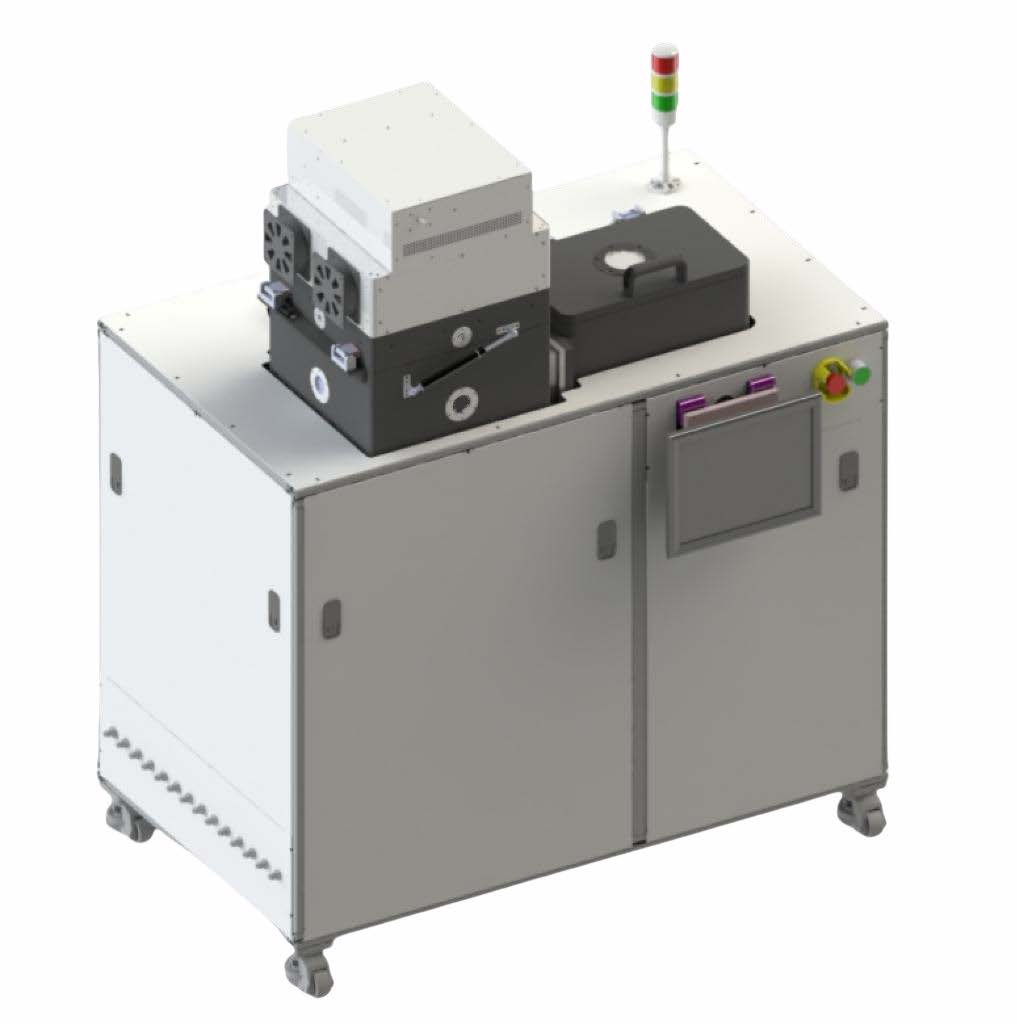
Core Concepts of plasma treatment throughout microchip processing. This approach exploits excited plasma to accurately strip layered elements for controlled design during nanomanufacturing. By calibrating main characteristics like gas formulations, plasma power, and gas pressure, the process velocity, etch conduciveness, and anisotropy can be carefully optimized. Plasma technique has changed chip fabrication, monitors, and latest computing tools.
- Also, plasma etching is widely examined for areas involving light manipulation, clinical areas, and composite materials study.
- A variety of forms of plasma etching exist, including ion-triggered etching and induced plasma etching, each with individual strengths and constraints.
The sophisticated characteristics of plasma etching necessitate a in-depth grasp of the fundamental mechanical laws and chemical mechanisms. This paper seeks to offer a exhaustive summary of plasma etching, covering its key points, several classifications, functions, quality aspects, obstacles, and projected paths.
Advanced Riechert Etchers for Microfabrication
Concerning small-scale production, Riechert etchers are prominent as a prime option. These state-of-the-art devices are famed for their unrivaled sharpness, enabling the creation of sophisticated patterns at the minuscule level. By employing innovative etching methods, Riechert etchers guarantee accurate directing of the manufacturing sequence, generating first-rate outcomes.
Applications of Riechert etchers cover a varied assortment of sectors, such as circuitry. From generating microchips to designing advanced medical gadgets, these etchers form a cornerstone in guiding the progress of technical advances . With focus to advancement, Riechert pioneers norms for exact microfabrication.
Reactive Ion Etching: Essentials and Usage
Ion-assisted reactive etching constitutes a crucial means in chip manufacturing. RIE engages a combination of charged species and reactive gases to remove materials with fine control. This action comprises bombarding the targeted material with high-energy ions, which collide with the material to generate volatile evaporated products that are then transported by a evacuation process.
RIE’s expertise in profile anisotropy makes it especially useful for producing sophisticated layouts in digital microdevices. Deployments of reactive ion etching encompass the manufacturing of transistors, chip designs, and optical systems. The technique can also create deep trenches and contact holes for small-scale memories.
- Reactive ion workflows offer precise control over removal speeds and etch preference, enabling the manufacture of advanced details at narrow tolerances.
- Many active gases can be employed in RIE depending on the workpiece and essential etch profiles.
- The profile-controlled quality of RIE etching facilitates the creation of precise edges, which is fundamental for certain device architectures.
Achieving Fine Control in ICP Etching
Inductive plasma processing has manifested as a important technique for fabricating microelectronic devices, due to its exceptional capacity to achieve strong directional etching and selectivity. The accurate regulation of plasma metrics, including power control, atmospheric constituents, and applied pressure, facilitates the careful modification of process speeds and etching outlines. This adaptability makes possible the creation of detailed forms with reduced harm to nearby substances. By enhancing these factors, ICP etching can efficiently curb undercutting, a typical complication in anisotropic etching methods.
Investigation into Plasma Etching Techniques
Plasma etching methods are globally recognized in the semiconductor realm for formulating sophisticated patterns on material bases. This survey evaluates different plasma etching protocols, including chemical vapor deposition (CVD), to evaluate their functionality for multiple materials and applications. The summary highlights critical aspects like etch rate, selectivity, and topography quality to provide a thorough understanding of the positives and limitations of each method.
Plasma Parameter Optimization for Improved Etching Rates
Realizing optimal etching speeds in plasma operations requires careful factor refining. Elements such as energy input, reactant proportioning, and pressure condition substantially affect the etching output. By systematically calibrating these settings, it becomes possible to improve quality results.
Chemical Fundamentals of Reactive Ion Etching
Reactive ion beam etching is a essential process in small device creation, which incorporates the employment of ionized carbon particles to meticulously carve materials. The underlying principle behind RIE is the dynamic interplay between these reactive charged domains and the material interface. This exchange triggers ionic reactions that parse and remove particles from the material, resulting in a planned arrangement. Typically, the process makes use of a mixture of chemical gases, such as chlorine or fluorine, which are energized within the reaction vessel. These high-energy ions assail the material surface, prompting the etching reactions.Efficiency of RIE relies on various parameters, including the form of material being etched, the preference of gas chemistries, and the processing factors of the etching apparatus. Fine control over these elements is imperative for ensuring outstanding etch structures and lowering damage to contiguous structures.
Shaping Etch Outcomes in ICP Systems
Ensuring strict and uniform designs is key for the functionality of diverse microfabrication procedures. In inductively coupled plasma (ICP) treatment systems, regulation of the etch form is key in defining ranges and patterns of fragments being manufactured. Major parameters that can be adjusted to affect the etch profile contain plasma gas ingredients, plasma power, workpiece warmth, and the design of the electrode. By carefully adjusting these, etchers can engineer structures that range from rounded to extremely directional, dictated by explicit application requirements.
For instance, focused directional etching is generally preferred to create long narrow grooves or contact vias with strongly delineated sidewalls. This is realized by utilizing elevated halide gas concentrations within plasma and sustaining small substrate temperatures. Conversely, uniform etching constructs circular profiles owing to the technique's three-dimensional character. This variation can be practical for macro scale adjustments or surface leveling.
What's more, state-of-the-art etch profile techniques such as alternating gas etching enable the manufacturing of ultra-fine and high, narrow features. These approaches reliably call for alternating between treatment stages, using a amalgamation of gases and plasma conditions to secure the desired profile.
Identifying the factors that control etch profile management in ICP etchers is vital for refining microfabrication procedures and obtaining the expected device utility.
Plasma-Based Removal in Microelectronics
Plasma processing is a key approach employed in semiconductor assembly to sensitively reduce substances from a wafer interface. This practice implements energized plasma, a fusion of ionized gas particles, to clear designated sections of the wafer based on their elemental makeup. Plasma etching combines several strengths over other etching strategies, including high dimension control, which allows for creating slender trenches and vias with low sidewall corruption. This precision is vital for fabricating sophisticated semiconductor devices with composite images.
Uses of plasma etching in semiconductor manufacturing are numerous. It is deployed to generate transistors, capacitors, resistors, and other major components that constitute the cornerstone of integrated circuits. In addition, plasma etching plays a crucial role in lithography systems, where it boosts the unerring patterning of semiconductor material to delineate circuit plans. The elevated level of control furnished by plasma etching makes it an necessary tool for advanced semiconductor fabrication.
Cutting-Edge Advances in Plasma Treatment
Charged plasma processing progresses steadily, Reactive Ion Etching driven by the rising need of advanced {accuracy|precision|performance